
De Quervain's tenosynovitis is one of the most common causes of pain at the base of the thumb, especially in people who perform repetitive hand or wrist movements. Recognizing its symptoms early and understanding its causes will facilitate an accurate diagnosis, allowing for effective treatment and a return to normal function.

What is De Quervain's tenosynovitis and which tendons does it affect?
De Quervain's tendinitis is an inflammation of the tendons that allow you to move and abduct your thumb., Specifically, the abductor pollicis longus and extensor pollicis brevis muscles, causing pain when making a fist, gripping something, or rotating the wrist.
Why does inflammation at the base of the thumb cause pain when moving the wrist?
Although the problem is concentrated in the thumb, these tendons are also activated by certain wrist movements, and if they are inflamed, any gesture involving movement or sliding in that area can cause pain. This is why actions like opening a jar, turning a key, or lifting weight can be uncomfortable.
What is the difference between De Quervain's tenosynovitis and other thumb or wrist injuries?
Unlike other conditions such as thumb osteoarthritis or ligament injuries, De Quervain's tenosynovitis affects the tendons and not the joint itself. In this case, the pain is localized to a specific point at the base of the thumb and appears or worsens with movement, especially when performing repetitive or gripping motions.
In De Quervain's tendinitis, there is usually no deformity or clear traumatic history. These characteristics help to differentiate it from other hand and wrist injuries. A proper clinical evaluation will confirm the origin of the pain and guide the treatment precisely.

Do you need a second opinion about a spinal problem or traumatic injury?
We review your MRIs, reports, and tests to give you a clear diagnosis and an appropriate treatment plan.
Request a second medical opinionWhat are the symptoms of De Quervain's tendinitis?
The main symptom of De Quervain's tendinitis is pain at the base of the thumb., It appears gradually and worsens with hand use. In its initial stages, it may be mild or intermittent, but over time it can become more constant and limit daily activities.
In this case, the pain increases with movements that involve gripping or bending the wrist, and in some cases, it can radiate into the forearm. The intensity will depend on the degree of tendon irritation and the person's activity level.
Pain when gripping objects, twisting the hand, or lifting weights
Everyday activities such as opening a jar, turning a key, holding bags, or lifting objects can trigger pain, as these actions involve activating the affected tendons, which generates friction in the inflamed area.
As the problem progresses, simple actions such as using a mobile phone or writing can cause a lot of discomfort, affecting both daily life and performance in work or sports activities.

Inflammation, clicking, and loss of strength at the base of the thumb
In addition to pain, inflammation at the base of the thumb is common in De Quervain's tendinitis., which may be visible or perceived as a feeling of swelling or tightness in the area.
Some patients report clicking or an uncomfortable rubbing sensation when moving the thumb, as well as loss of strength, especially when pinching with the fingers or holding objects, which clearly makes everyday tasks difficult.
What causes De Quervain's tenosynovitis?
De Quervain's tendinitis is triggered by a progressive overload of the thumb tendons. It is not exactly an injury but the result of wear and tear on the area due to repeated movements that end up irritating the area.
When this load exceeds the tendon's capacity to adapt, inflammation occurs, resulting in pain. Therefore, understanding the root cause of the problem is key to treating it and preventing it from recurring.
Repetitive movements, overuse, and gestures that irritate the tendons
Repetitive use of the hand and wrist is the most frequent cause. Everyday activities such as typing on a mobile phone, using a mouse, opening and closing packages, or performing specific manual tasks can cause an overload on the tendons of the thumb.
They can also be affected by certain sustained or poorly executed movements, especially when there are not enough breaks, which over time cause irritation in the tendons and hinder their natural movement.
Pregnancy, postpartum, and other common risk factors
There are situations in which the risk of developing this tendinitis increases. Pregnancy and postpartum are common examples, due to hormonal changes and increased activity such as repeatedly carrying the baby.
Other factors, such as age and certain work or sporting activities, contribute to its development. In many cases, there is no single cause, but rather a combination of factors that ultimately trigger the problem.
How is De Quervain's tendinitis diagnosed?
The diagnosis of De Quervain's tenosynovitis is primarily clinical, based on the patient's history and physical examination. Diagnosis is generally not delayed, and complex tests are not usually required, as the symptoms and location of the pain are typically quite characteristic.
The goal here is to identify if the source of the pain is specifically in the tendons of the thumb and rule out other possible causes, such as joint problems or wrist injuries.
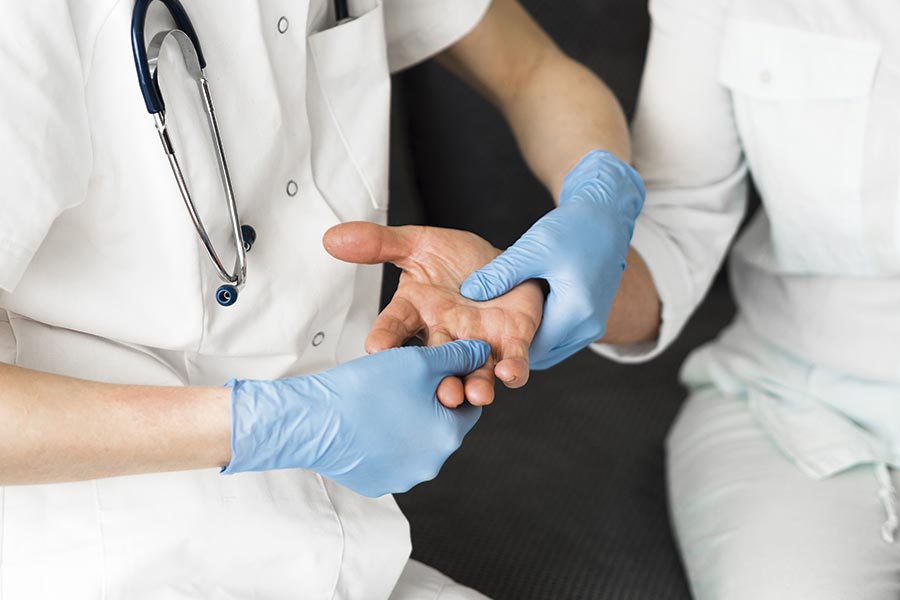
What does the specialist explore during a consultation, and what does the Finkelstein test indicate?
During the consultation, the specialist identifies the location of the pain, asking in what situations it occurs and how it affects the patient's hand mobility. A physical examination is also performed to assess sensitivity at the base of the thumb and its response to movement.
One of the most commonly used tests to confirm De Quervain's tendinitis is the Finkelstein test. This test involves placing the thumb inside the hand, closing the fingers around it, and deviating the wrist. If this movement causes pain at the base of the thumb, it is considered a sign consistent with De Quervain's tenosynovitis.

When are imaging tests needed to confirm the diagnosis?
In most cases, imaging tests are not necessary, although they may be indicated when there are doubts about the diagnosis or when other pathologies need to be ruled out.
Ultrasound, for example, allows us to assess the condition of the tendons and detect signs of inflammation, while magnetic resonance imaging is reserved for more complex cases or when symptoms do not improve with the usual treatment.
How is De Quervain's tendinitis treated?
In general, the treatment for De Quervain's tendinitis is conservative. The goal is to reduce inflammation, relieve pain, and restore hand function. The key is to decrease the stress on the tendons and allow them to move normally again.
Initially, it's important to adjust activity and avoid movements that cause pain to begin improving. From there, a specialized treatment plan is determined based on the patient's specific case.
Rest, splinting, physiotherapy, and injections to relieve pain
Relative rest is one of the first measures, as it avoids movements that irritate the area without resorting to prolonged, complete immobilization. Sometimes a splint is used to limit thumb movement and reduce the load on the tendons, but this is not the most common approach.
Physiotherapy is an added benefit that helps improve mobility, reduce inflammation, and restore function. When pain persists or is more intense, injections with anti-inflammatory drugs can be considered to relieve symptoms more directly.

When to consider surgery if conservative treatment doesn't work
Surgery is considered when conservative treatment has successfully improved symptoms after a reasonable period. The procedure is simple and involves releasing the tendon sheath, reducing pressure and facilitating their movement.
At Clínica Elgeadi, we treat De Quervain's tendinitis with precision. With personalized treatment aimed at relieving pain and restoring hand function effectively and permanently, don't hesitate to contact us if you suffer from this condition.


