
Thumb rhizarthrosis is a common form of osteoarthritis that affects the base of the thumb, near the wrist. This condition can wear down the cartilage, potentially causing pain when opening jars, turning a key, or grasping small objects. Recognizing these symptoms allows for an assessment of the wear and tear and the selection of the appropriate treatment to relieve pain and preserve function.

What is thumb rhizarthrosis and why does it affect the base of the hand?
Rhizarthrosis is the osteoarthritis of the trapeziometacarpal joint, that is, it is the progressive wear and tear of the cartilage located at the base of the thumb, right where it joins the wrist.
When the joint is damaged, friction occurs in the area, causing pain, inflammation, and difficulty exerting force. Age, family history, ligament laxity, and previous injuries are factors that contribute to its development.
Which joint wears down when thumb rhizarthrosis occurs?
The affected joint is the trapeziometacarpal joint, which connects the trapezium bone of the wrist to the first metacarpal bone of the thumb. This joint allows the thumb to be abducted, rotated, and opposed to the other fingers to grasp objects. According to the AAOS (American Association of Osteoarthritis Society) regarding thumb osteoarthritis, this mobility and the daily stresses it bears make it particularly vulnerable to wear and tear.
What is the difference between rhizarthrosis and arthritis in the hand?
The main difference is that rhizarthrosis is a specific type of osteoarthritis, identified as a mechanical wear and tear of the cartilage located only at the base of the thumb, while arthritis in the hand is an inflammatory process of autoimmune or infectious origin that usually affects several joints at the same time. Both conditions have completely different symptoms, causes, and treatments. NIAMS explains its features and why it requires a different approach.
What symptoms does thumb rhizarthrosis cause in daily life?
The symptoms of rhizarthrosis are usually noticeable when using the hand to hold, squeeze, or turn objects. They can appear seasonally and vary in intensity.
- Pain at the base of the thumb: discomfort may be felt when turning a key, opening a lid, or lifting a cup.
- Loss of strength: difficulty is recorded in holding objects or pinching between the thumb and index finger.
- Stiffness: there is less ease in separating the thumb or bringing it closer to the other fingers.
- Swelling: there is some or considerable tenderness and increased volume around the joint.
- Bony prominence: a lump may appear at the base of the thumb associated with joint changes.
- Pain at rest: You are likely to feel discomfort that may persist after using your hand or overnight.

Why does my thumb hurt when I open jars, write, or use my mobile phone?
It hurts because these movements require pinching, twisting, or repeatedly using the thumb. Straining can irritate an already affected joint. Opening a lid requires strength, and writing or using a mobile phone involves prolonged and repetitive activity. This doesn't mean that these habits alone cause osteoarthritis, but they should be taken into account.
What signs indicate that thumb rhizarthrosis is progressing?
Signs such as progressive loss of mobility, difficulty opening the hand, and changes in thumb position may indicate that rhizarthrosis is progressing. In some cases, the base of the thumb shifts, resulting in a deformity that makes pinching difficult. The intensity of the pain does not always match the wear and tear shown on the x-ray; it can be much greater or hardly noticeable.
When is it advisable to consult a doctor for pain at the base of the thumb?
If you experience pain at the base of your thumb, you should consult a doctor if the pain recurs, interferes with daily tasks, or if you experience weakness, swelling, or deformity. You don't have to wait until it prevents you from using your hand to see a doctor.
If it appears after a fall, the joint is very red, hot, and suddenly develops a fever, the patient needs prompt evaluation to rule out other causes.
How is thumb rhizarthrosis diagnosed in a consultation?
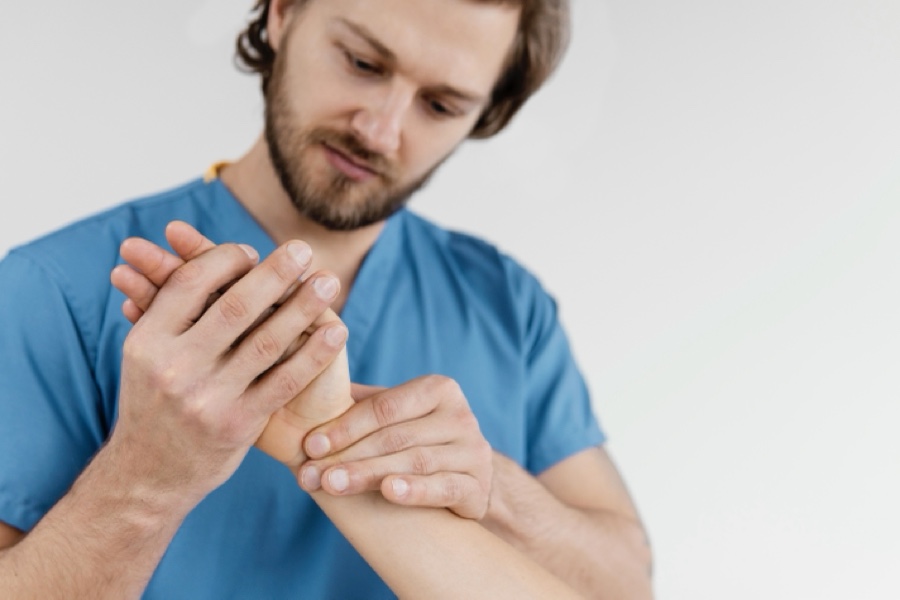
The diagnosis begins with the patient's description of their symptoms, along with a physical examination of the hand and, when necessary, X-rays. The doctor must check where the pain is located, how the thumb moves, and its strength. The Hand and Wrist Unit at Clínica Elgeadi studies these symptoms to differentiate them from other injuries.
What tests help confirm thumb wear?
To confirm thumb wear, tests such as x-rays help to observe narrowing of the space between joints, bone overgrowths, and possible alignment changes.
During the examination, the specialist may gently compress and rotate the affected area to check if the pain is reproduced. No single maneuver is sufficient to confirm rhizarthrosis. For thumb wear, resonance is not usually necessary in typical cases.
What other injuries can be confused with thumb rhizarthrosis?
There are other injuries that can be confused with rhizarthrosis, such as De Quervain's tenosynovitis, which causes pain on the thumb side of the wrist but affects the tendons. Trigger finger often causes catching or locking when bending the wrist.
Carpal tunnel syndrome can also be a source of confusion, as it primarily causes tingling or numbness. Something as simple as an injury from a fall can cause similar pain and may coexist with rhizarthrosis.
What treatments relieve thumb rhizarthrosis?
Conservative treatment for rhizarthrosis aims to relieve pain and facilitate hand use through activity modification, the use of splints, exercises, and medication when indicated. Incorporating new habits is also important., Using thicker openers or handles reduces the effort required to grip the handles.. The British Society for Surgery of the Hand describes these conservative options.
When do splints, exercises, and injections help in rhizarthrosis?
Splints, by supporting the base of the thumb, can relieve pain during tasks or at night. Adapted exercises are good for improving mobility and stability without straining the joint.
If discomfort persists, a corticosteroid injection may be considered, although the relief will vary and be temporary depending on the case. All of these treatments can alleviate symptoms, but they do not regenerate worn cartilage.

When is surgery considered for thumb rhizarthrosis?
Surgery for rhizarthrosis is considered when pain and limited mobility persist despite appropriate conservative treatment. The decision will depend on the patient's needs and the professional's assessment.
Options include trapezius removal, joint replacement, or fusion in selected cases. Each procedure has advantages and limitations that should be explained in detail before making a decision.
What kind of recovery can be expected after treating thumb rhizarthrosis?
Conservative treatment for rhizarthrosis aims to restore activity with less pain. After surgery, splinting and progressive rehabilitation are usually necessary, as functional recovery can take several months, depending on the technique used.
The AAOS on thumb arthroplasty He explains that improvement can continue for months with the goal of having a more useful and less painful hand, without guaranteeing a full recovery of previous strength.

If the discomfort affects your daily life, you can request a Assessment at Elgeadi Clinic to learn about the options we offer and the recovery goals according to your case.


