
Iliotibial band syndrome, commonly called runner's syndrome, appears due to repetitive rubbing of the bones of the knee, causing pain when running. This is a very common injury in runners, whether they are beginners due to inadequate technique or expert runners due to overtraining. Keep reading the post!

What is iliotibial band syndrome?
The iliotibial band friction syndrome It is a common injury that affects athletes, especially runners. This condition occurs when the long tendon of the fascia lata, which is a thick band of connective tissue on the side of the thigh, repeatedly rubs against the lateral femoral condyle. This common injury manifests itself with very annoying pain in the knee, which, in some cases, can be disabling.
Although iliotibial band syndrome is more common in runners, it can also affect people who practice cycling, basketball, and other repetitive knee flexion and extension movements.

Do you need a second opinion about a spinal problem or traumatic injury?
We review your MRIs, reports, and tests to give you a clear diagnosis and an appropriate treatment plan.
Request a second medical opinionSymptoms of iliotibial band syndrome
This syndrome is mainly characterized by pain on the outside of the knee.. This pain tends to increase during physical activity, especially running, and can vary in intensity, being described as sharp, stabbing, or burning. In addition to pain during running, sufferers of iliotibial band syndrome also experience pain when walking, especially when descending stairs or sitting for long periods with their legs bent.
Other symptoms that may accompany the pain include tenderness to the touch on the side of the knee, swelling or inflammation in the affected area.
In the presence of these symptoms, it is recommended to seek medical attention to obtain an accurate diagnosis and an appropriate treatment plan.

Causes and risk factors of runner's knee
The causes of iliotibial band syndrome can be diverse and there are several factors that influence when it develops. Some of them have to do with the physiology of the knee and others due to external conditions.
Some studies show that a runner's injury is caused by not having good muscles in the lower extremities, so that the weight of the body is shifted towards the knee and causes an overload of its muscles. Thus, lack of strength in the hip abductor muscles can cause excessive inward rotation of the knee.
For its part, Runners with Genu Varus are more likely to suffer from iliotibial band syndrome, so that during running, the band on the lateral part of the thighs is under tension.
When training is suddenly increased, whether by adding time or weight, stress appears that facilitates the appearance of this injury.
It is important to take care of the shoes you train in, as some can change the way you run and cause tension in the iliotibial band. The unevenness of the terrain when running or Running on hard terrain, such as asphalt, facilitates the appearance of runner's syndrome.
Diagnosis of "runner's knee"
For the diagnosis and treatment of iliotibial band syndrome, it will be the specialist who can offer an individualized diagnosis and appropriate treatment for the pathology.
The expert will be able to accurately diagnose the problem and will know the source of the pain. During the examination, the diagnosis is confirmed by pressing the fascia lata tendon against the lateral condyle. Additionally, MRI will help rule out other diagnoses.
The Ober test aims to measure the extensibility of the tensor fascia lata muscle. and check if there is a shortening of the iliotibial band.
It is also important to know that trigger points may exist along the fascia lata. The test will be completed with other complementary tests whose objective is muscle assessment.
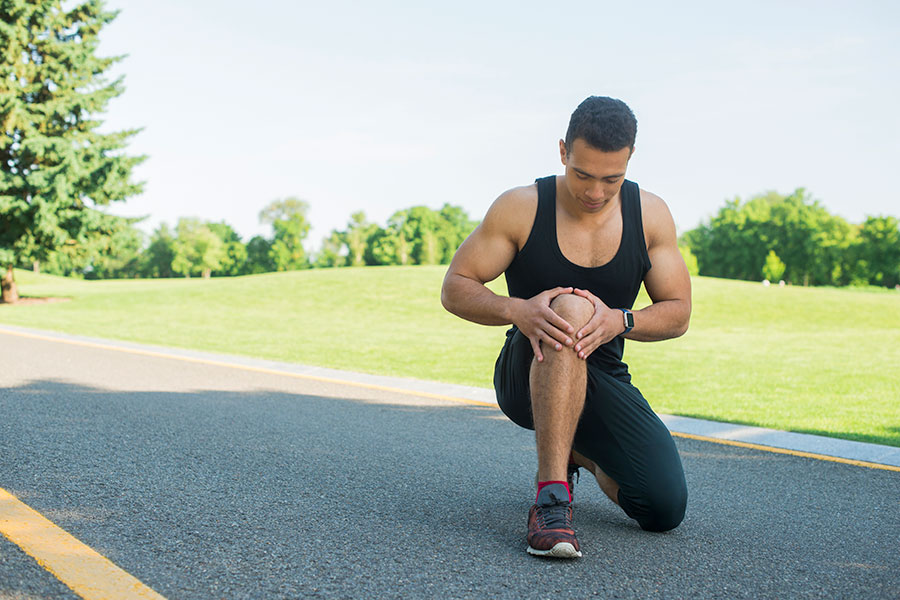
Prevention of iliotibial band syndrome in athletes
To reduce the risk of developing iliotibial band syndrome, some preventive measures can be implemented. Among them, the following stand out:
- Running on flat terrain.
- Gradually increase time and distance when jogging.
- Maintain correct postural hygiene during exercise.
- Perform stretching exercises before and after training.
- Listen to your body and take the necessary rest.
These prevention strategies can help athletes reduce the risk of developing runner's knee syndrome and maintain a healthy, injury-free sports practice.
Treatment of runner's knee syndrome
The first step in the treatment of runner's knee is to calm the inflammation, either by applying ice to the knee area, anti-inflammatory medication recommended by the specialist and a physiotherapy treatment, so that the tension in the fascia may not appear again when you proceed to train.
On the other hand, it is essential to completely stop physical activity, especially running or cycling, going to a professional so that they can determine the most appropriate treatment for the case. Otherwise, the patient runs the risk of the injury getting worse and the cause that caused the problem cannot be corrected.
Physiotherapy and sports massages for myofascial release They will help relax the tissues and fascia lata.
In the most severe cases, it will be important to consider performing surgery for runner's syndrome, proceeding to perform a knee arthroscopy, lengthening the posterior fibers of the iliotibial band tendon through a minimum incision of 2-3 millimeters in the patient's skin.
How long does it take for the iliotibial band to heal?
Recovery from a minor injury to the iliotibial band It generally takes a few weeks with proper treatment and the patient's adherence to the recovery plan.n However, in more severe cases, recovery may take several weeks or even months to fully heal. In any situation, it is crucial that the patient follows the doctor's instructions to ensure optimal recovery.
Exercises to relieve iliotibial band pain
To relieve pain associated with the iliotibial band, a series of specific exercises are recommended that can help reduce tension and improve flexibility. Among them are:
- Buttock stretch: Lie on your back with your knees bent and your feet flat on the floor. Raise one leg and bend it, then pull your knee towards your chest with the help of your hands. Hold this position for at least ten seconds and then repeat with the other leg.
- Abductor stretch: Lie on your back with your knees bent and the soles of your feet together. Keep your back straight as you drop your knees toward the floor and hold the position for a few seconds.
- hip stretch: Lie face up on the floor and bring one knee towards your chest, holding it with both hands. Hold the position for at least 10 seconds before switching legs.
- Standing Quadriceps Stretch: Standing, carry the weight on one leg and flex the other, bringing the ankle towards the buttock with the hand on the same side. Hold the position for a few seconds and then switch legs.
- Seated stretch: Sit on the floor with your legs extended in front of you. Lean forward from the hips and slide your hands up your legs as far as possible. Hold the position for a few seconds and repeat.

It is important to consult with a professional before beginning these exercises to ensure that they are appropriate and cannot worsen each patient's specific situation.
If you present any of these symptoms or suffer from any knee pathology, do not hesitate to make an appointment with our team. traumatologists experts in knee surgery for the best and fastest recovery of the joint. Remember that early intervention can make a difference in your quality of life and your ability to return to sports with confidence and comfort.
Schedule your appointment so we can start working on your recovery so you can regain your health and the functionality of your knee.


